

Space Tourism: A Revolution with the Miles Space Water Engine
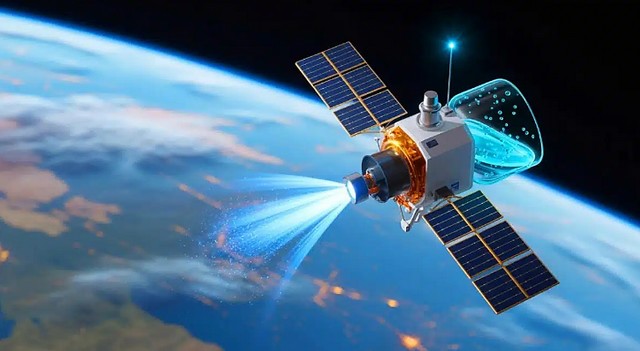
Under pressure from environmental movements and certain states, such as the European Union, which is increasingly considering banning hydrazine-based fuels used in the space race, there has been an acceleration in recent years in the search for less polluting and therefore more environmentally friendly fuels, commonly referred to as « green fuels. »
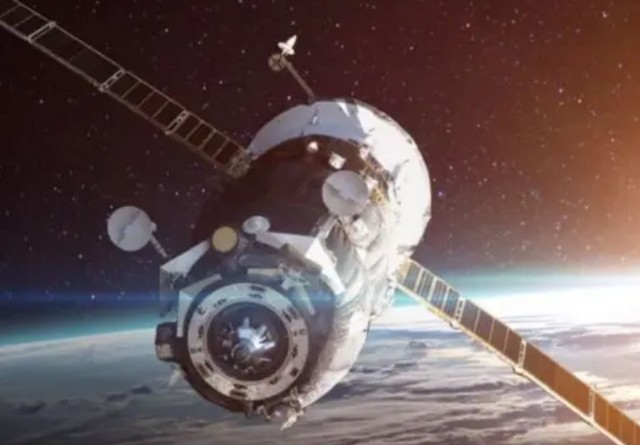 Two key observations, however, regarding these new types of fuels: – the heavy involvement of start-ups in this research; and – the « secrecy » aspect and therefore the difficulty of obtaining information in this area.
Indeed, the market for these « green fuels » has a promising future, hence the « very significant » financial interests at stake, where secrecy is sometimes deemed essential.
As early as 2020, propulsion specialists from the University of Tokyo and the company Pale Blue had studied an engine that breaks water molecules into oxygen and hydrogen using a magnetic field.
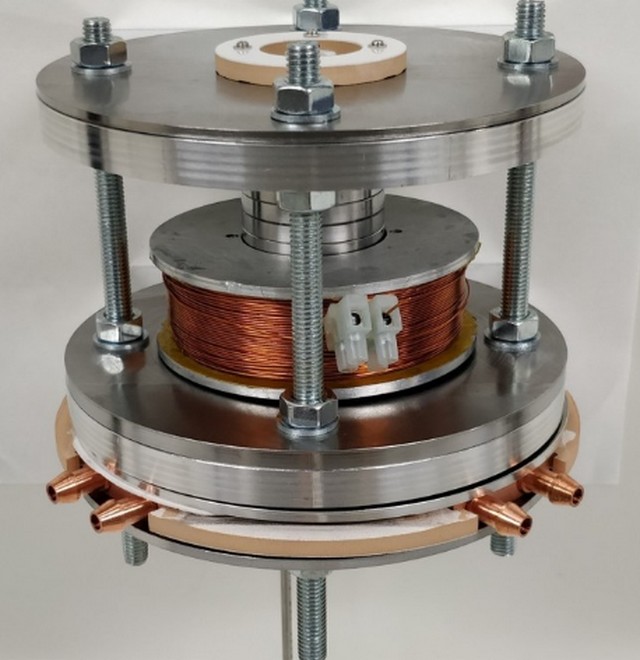 The system worked as follows: the steam transformed into plasma, generating positively charged ions and negatively charged electrons. The latter, expelled from the vehicle, exerted sufficient thrust on it to propel it.
In a new breakthrough for water engines, Florida-based Miles Space and its CEO Brad Berkson, former Director of PA&E at the U.S. Department of Defense, recently tested (in October 2025) a water-powered electric thruster requiring very little power.
It’s worth noting that while Miles Space developed its M1.5 thruster (which fits in a 10-centimeter cube), it also successfully optimized its characteristics through the use of artificial intelligence.
This method, developed by Miles Space, which involves converting water into steam and then ionizing it to create plasma, looks promising for many applications.
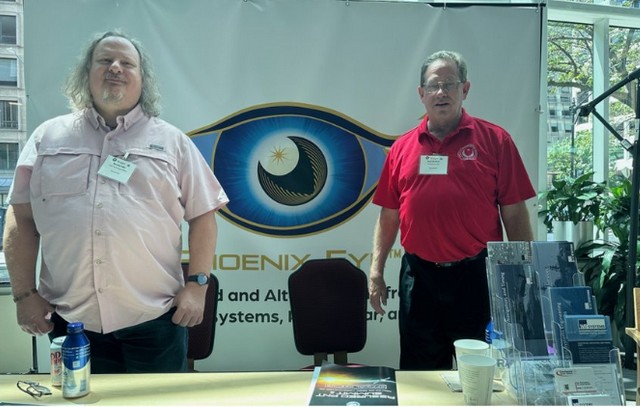 This leads Wesley Faler, the company’s Chief Technology Officer, to say, « Water, being an abundant resource, could be extracted from the lunar south pole for use as fuel.
A water-powered engine would simplify space travel from the lunar surface and other planetary bodies in the solar system. »
Brad Berkson, CEO Wesley Faler, Founder
It’s clear that water propulsion could radically transform space exploration.
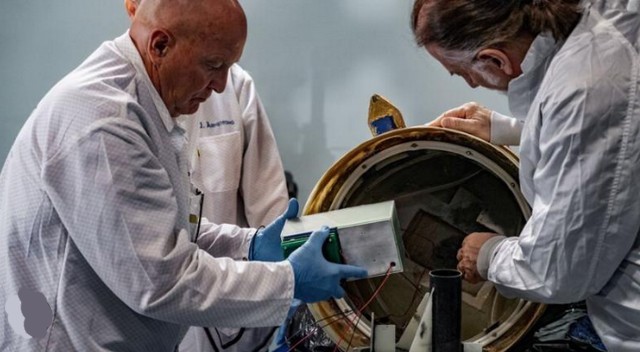 This water propulsion would have a very significant ecological impact, but also, given that missions will be increasingly long and distant, the use of locally available resources such as water (which exists on the Moon) could also reduce dependence on terrestrial supplies.
This would, of course, reduce costs and increase the sustainability of missions.
It goes without saying that this new form of propulsion is being studied by many space companies, which must face and respond to pressure from ecological and environmental lobbies.

On the same subject

Uber launches its Elite option
Uber has announced the launch of a new luxury transportation experience, provided by professional...

The ski industry in China is finally gaining its independence
The winter sports landscape in China is undergoing a profound transformation, as illustrated by...

Why Europe has become the world’s leading arms importer
Europe has gone, in just a few years, from a zone of relative stability...


