

The average American uses 20 kg of toilet paper per year. What are the eco-friendly alternatives?

The evolution of personal hygiene practices reflects a radical transformation, often overlooked despite its significant effects on the environment and health.
 Until the last century, the modern comforts of European toilets were nonexistent. In Roman times, researchers believe that ceramic fragments called « pessoi » were used for cleansing.
Long-term use of these abrasive ceramic shards could, according to experts from the British Medical Journal, have led to irritation, skin lesions, or hemorrhoidal complications.
The other common alternative was a sponge on a stick, often shared by several users, raising obvious hygiene concerns.
The existence of the modern private bathroom, complete with a flush toilet and other amenities, is a relatively recent luxury, having only become widespread in the last century.
 Cleaning practices evolved accordingly: the first packaged toilet paper wasn’t invented until 1857 and only became common in roll form in 1907.
The Environmental Impact of Toilet Paper
With the rise of the mass consumer economy, toilet paper, although representing approximately 10% of global paper production, has become a growing environmental concern.
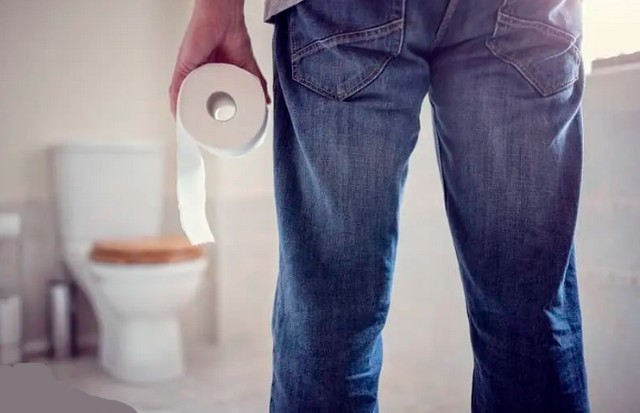 The average person in the United States, Canada, and Western Europe uses between 15 and 25 kg of toilet paper per year. Sergio Baffoni of the Environmental Paper Network warns that some major producers are criticized for their contribution to deforestation and, in some cases, for human rights violations.
A 2023 study from the University of Florida revealed the presence of PFAS (per- and polyfluoroalkyl substances, or « forever chemicals ») in 21 major toilet paper brands tested worldwide.
Researchers conclude that toilet paper should be considered a potentially significant source of PFAS entering sanitation systems, calling for further research.
Faced with these environmental and health findings, alternatives such as bidets or handheld showers are popular in many parts of the world.
NGOs like the Natural Resources Defense Council argue that these water-based solutions are more sustainable because they drastically reduce toilet paper use and require less water per use than the manufacturing process of tissues made from forest fibers.


On the same subject

C-beauty : how Chinese cosmetics are performing in Southeast Asia
Long overshadowed by its South Korean and Japanese counterparts, Chinese cosmetics, or C-beauty, is...

Chicago Blues, pure hipster music
Chicago Blues isn’t just a musical genre; it’s the soundtrack of a social revolution...

Are they really appropriate for breaking the Ramadan fast ?
Breaking the fast with dates is not just a religious tradition inherited from the...


